
Summary
PRP is effective for all hair types, including Black hair, because the treatment works at the follicular level — and the biological mechanisms of hair growth are universal regardless of hair texture, curl pattern, or color. The article addresses three hair loss conditions particularly relevant to the Black community: androgenetic alopecia (genetic pattern hair loss, which affects all backgrounds), traction alopecia (caused by repetitive tension from tight styling, which PRP can help address especially when caught early), and Central Centrifugal Cicatricial Alopecia (CCCA), a scarring form of alopecia where PRP can help manage inflammation and protect remaining viable follicles. Several common myths are addressed and corrected, including the belief that PRP won't work on Black hair, that chemical relaxers or heat are always the root cause of hair loss, and that Black hair grows more slowly than other hair types
One of the most common questions we get is whether Platelet-Rich Plasma (PRP) therapy is effective for Black hair.
It's a valid question, rooted in the unique characteristics and common concerns associated with textured hair.
The short answer is yes, absolutely. PRP is a powerful treatment for hair loss, regardless of hair type or background.
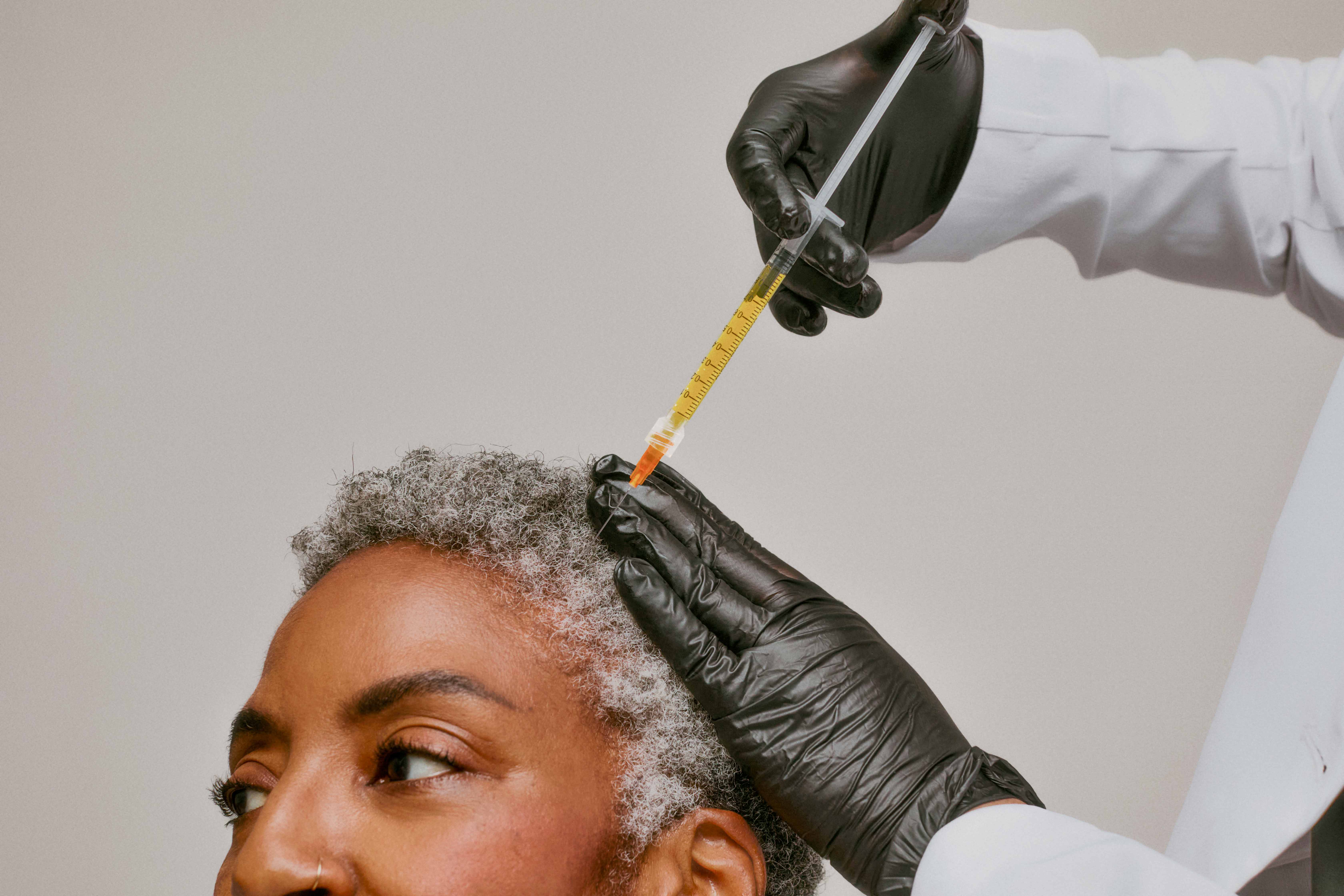
The key is to understand that PRP doesn't treat the hair strand itself—it treats the hair follicle, which is the engine of hair growth. Since the biological process of hair growth is the same for everyone, PRP can be a highly effective option. This post will explore how PRP works on all hair types, discuss hair loss conditions common in the Black community, and dispel some persistent myths.
Common Types of Hair Loss in the Black Community
Androgenic Alopecia (AGA)
Androgenic alopecia (AGA), also known as male- or female-pattern hair loss, is the most common form of hair loss and affects people of all backgrounds, ages, and genders. It often presents as a receding hairline or thinning at the crown in men, and as overall thinning in women. Driven by genetics, this condition causes gradual shrinkage of hair follicles, leading to slower growth and thinner hair over time.
PRP therapy is well-studied for AGA has been shown to be effective for people of every background. Because PRP targets the hair follicles directly, its benefits are independent of hair texture or type.
Traction Alopecia (TA)
Traction alopecia is hair loss caused by repetitive or prolonged tension on the hair follicles. While this condition can affect anyone, it appears more frequently in the Black community due to common styling practices—such as braids, weaves, extensions, and ponytails—that can put extra tension on the scalp and follicles. Over time, this consistent pulling can damage follicles and hinder new hair growth.
PRP can be effective for traction alopecia (TA), especially in its earlier stages before scarring has taken hold. By injecting growth factors directly into the affected areas, PRP can help heal damaged follicles and stimulate new growth. However, lasting results depend on relieving the source of tension and early intervention.

Central Centrifugal Cicatricial Alopecia (CCCA)
CCCA is a type of scarring alopecia that begins at the crown of the scalp and spreads outward. It primarily affects Black women and leads to permanent hair loss because it destroys the hair follicles and replaces them with scar tissue. The exact cause is unknown, but it's believed to involve a combination of genetic factors and inflammation.
While PRP cannot regrow hair from follicles that are already scarred and destroyed, it can be a valuable treatment for managing CCCA. The anti-inflammatory properties of PRP can help calm the scalp, slow the progression of the condition, and strengthen the remaining viable follicles. Early intervention is critical for the best results.
Dispelling Myths About Black Hair and Hair Loss
Misinformation can create barriers to seeking effective treatment. Let's clear up a few common myths.
Myth: PRP won't work because Black hair is different.
Fact: This is the most important myth to debunk. PRP therapy works at the follicular level—the "root" of the hair beneath the scalp. The biological mechanisms that control hair growth are universal, regardless of the hair's texture, curl pattern, or color. PRP stimulates these follicles by delivering a potent dose of growth factors, which helps to increase blood flow, reduce inflammation, and prolong the growth phase. Your hair texture has no bearing on the treatment's effectiveness.
Myth: Hair loss is just caused by chemical relaxers or heat.
Fact: While overuse of chemical treatments and excessive heat can cause significant hair breakage and damage, they are not always the root cause of hair loss. Conditions like androgenetic alopecia (AGA), CCCA, and alopecia areata (AA) have genetic or autoimmune components. Attributing all hair loss to styling practices can prevent individuals from seeking a proper care and effective medical treatment.
Myth: Black hair growths more slowly than other hair types.
Fact: Hair growth rates are generally consistent across all ethnicities, averaging about half an inch per month. The perception that Black hair grows more slowly often stems from the fact that coily or curly hair shrinks significantly when dry, making it appear shorter. Additionally, breakage can make it seem like the hair isn’t growing.
Why PRP Can Be a Great Option for Black Hair
PRP is a versatile and effective treatment that addresses hair loss from multiple angles, making it a suitable option for the concerns often faced by the Black community.
It's Safe and Natural: Since the treatment uses your own blood, there is virtually no risk of allergic reaction or serious side effects.
It Fights Inflammation: The anti-inflammatory properties of PRP are particularly beneficial for hair loss where this is occuring.
It Stimulates Damaged Follicles: For non-scarring conditions like early-stage traction alopecia and genetic, pattern hair loss, PRP can help rejuvenate dormant or damaged follicles.
It Complements Other Treatments: PRP can be integrated into a holistic treatment plan that may include lifestyle changes (like loosening or rotating tight hairstyles), topical or oral medications, and nutritional support.
Your Path to Healthier Hair
If you are experiencing hair thinning or loss, the first step is to get an accurate consultation from a qualified professional. At our studio, we understand the nuances of all hair types and can create a personalized plan tailored to your specific needs.
Share