Summary
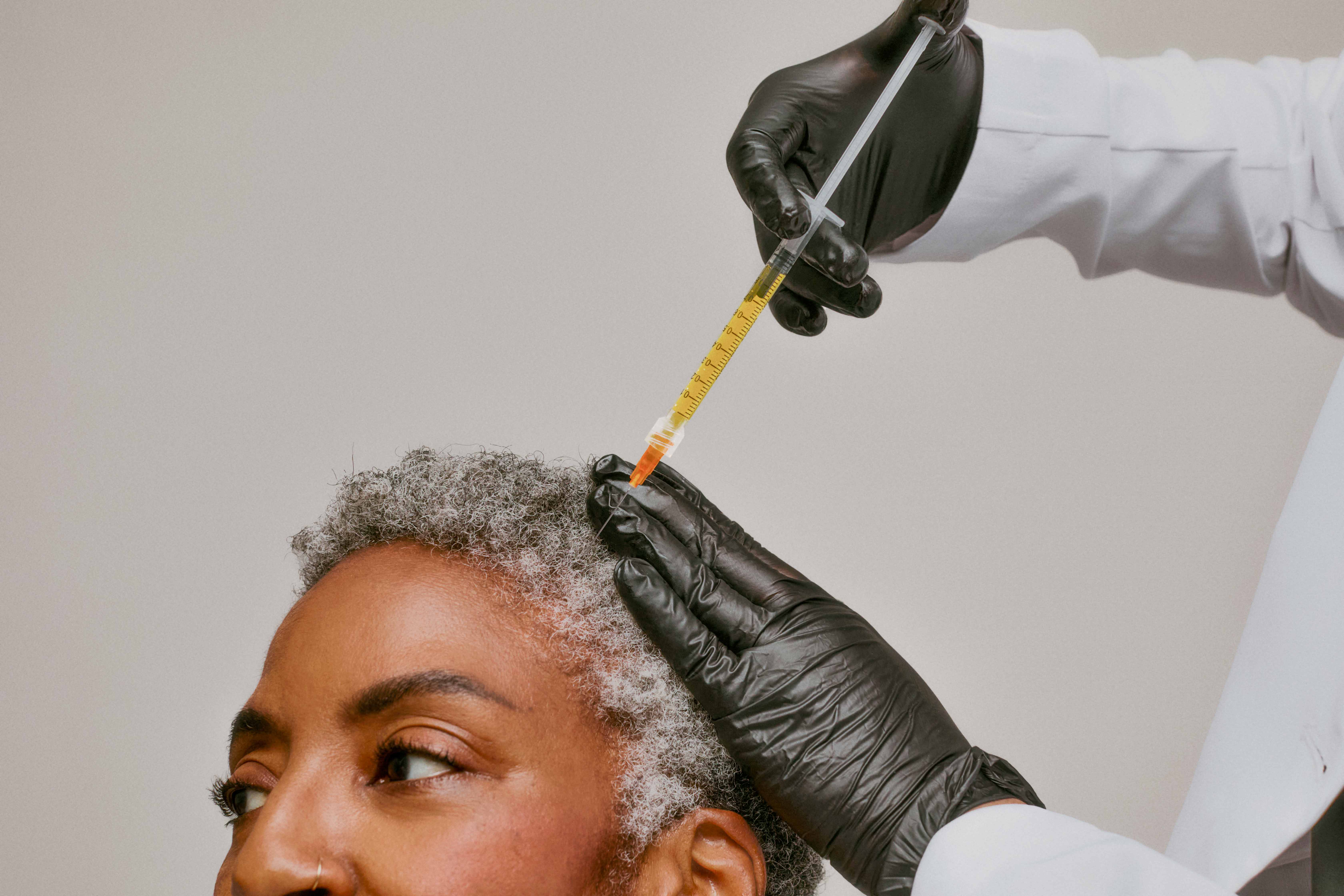
Both treatments are needle-free, but they work in fundamentally different ways. Alma TED uses ultrasound to push a proprietary serum deeper into the scalp — it's essentially a more effective applicator for a formula. FoLix uses a 1565nm fractional laser to create microscopic zones of controlled thermal injury, triggering the body's own regenerative pathways (Wnt/β-catenin and Sonic Hedgehog signaling) with no external chemicals at all. FoLix is the first FDA-cleared fractional laser for hair loss and is backed by peer-reviewed, independently published studies. We chose it because it activates your biology rather than augmenting it — and because when paired with PRP, the two mechanisms stack in a way that TED and PRP simply don't.
Both are needle-free. That's where the similarity ends.
Alma TED uses ultrasound to push a growth-promoting serum deeper into the scalp. The device is primarily a delivery vehicle — it enhances absorption of a topical formula. The results depend largely on what's in that formula, and independent clinical evidence remains limited.
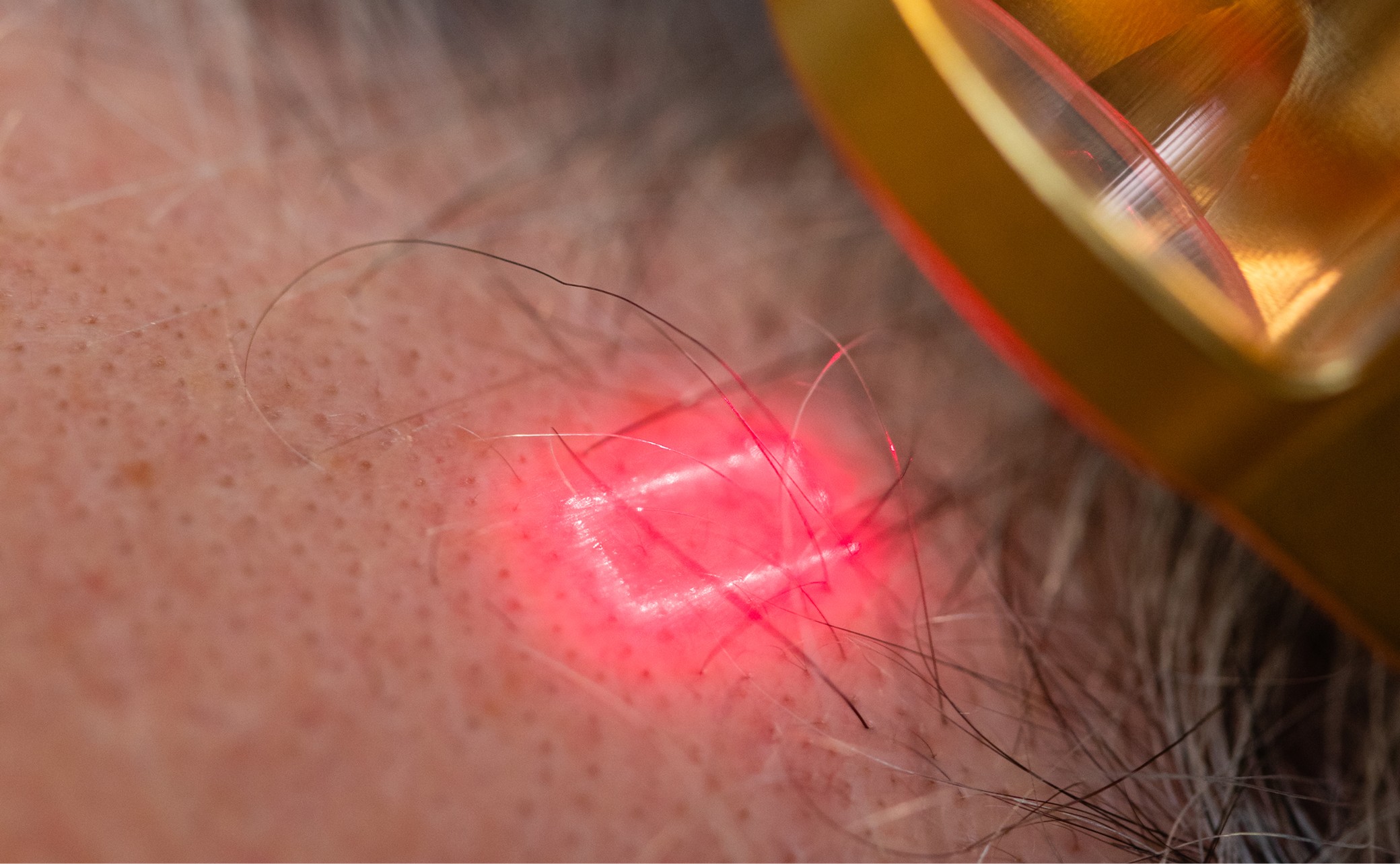
FoLix uses a fractional laser to create microscopic zones of controlled thermal injury in the scalp. That triggers the body's own regenerative response — no chemicals, no serum, no external formula required. It's the first and only FDA-cleared fractional laser for hair loss, backed by peer-reviewed published studies and a 2025 Medical Device Innovation Award.
We chose FoLix because we believe in treatments that activate the body's biology, not just augment it. And when we combine FoLix with PRP — which does the same — the result is more powerful than either alone.
How each treatment actually works
The mechanism matters more than the marketing.
FoLix by Lumenis | Alma TED |
|---|---|
Laser-induced regeneration | Ultrasound-assisted serum delivery |
A 1565nm non-ablative fractional laser delivers precise micro-thermal zones into the scalp without removing tissue. These microscopic injuries trigger a natural healing cascade — activating the Wnt/β-catenin pathway and Sonic Hedgehog (SHH) signaling — two of the primary biological drivers of hair follicle growth. The follicle wakes up from within. | Low-frequency acoustic sound waves and air pressure create temporary microchannels in the scalp, allowing a proprietary peptide and growth factor formula to penetrate more deeply than topical application alone. The device enhances absorption — it is the delivery system. The biological work is done by the serum, not the device. |
In plain terms | In plain terms |
FoLix uses a laser to create tiny, controlled signals of injury in your scalp — too small to feel or see, but enough to wake up your body's repair system. Your scalp responds by sending growth signals to dormant hair follicles. Think of it like jump-starting a car: the laser gives your follicles the signal they need to start doing what they already know how to do. No products are applied. Your body does the work. | Alma TED uses sound waves to temporarily open up the skin on your scalp, then pushes a growth-promoting serum deeper into it than you could get with a regular topical. The device itself isn't what grows your hair — it's more like a more effective applicator for the formula being used. The quality of results depends significantly on what's in that formula. |
The key difference: FoLix tells your own body to grow hair. Alma TED helps deliver a product that tries to do the same thing. One treatment works from the inside out. The other works from the outside in. |
|---|
Side-by-side comparison
At a glance.
FoLix | Alma TED | |
|---|---|---|
Mechanism | Fractional laser — triggers body's own regenerative response | Ultrasound — enhances penetration of a topical serum |
Technology type | Non-ablative fractional laser (NAFL), 1565nm | Low-frequency acoustic cavitation + air pressure |
Requires external chemicals/serum? | No — drug-free | Yes — formula required |
FDA status | FDA-cleared (first fractional laser for hair loss) | FDA-cleared (for general hair thinning) |
Independent peer-reviewed studies | Yes — published in Lasers in Surgery and Medicine and Journal of Cosmetic Dermatology | Limited — most data is manufacturer-funded or from small clinical studies |
Needles or injections | None | None |
Downtime | None | None (avoid washing/coloring hair for 24 hrs) |
Session length | ~30 minutes | ~20–45 minutes |
Treatment course | 4–6 monthly sessions, then 2–3x/year maintenance | 3 sessions, 4 weeks apart; maintenance TBD |
Skin type eligibility | Fitzpatrick I–IV | Generally broader, though evidence thins for darker tones |
How growth is triggered | Laser activates your body's own follicle growth signals (Wnt/β-catenin, SHH) — no products needed | Growth depends on the serum's ingredients penetrating the scalp — formula quality matters |
Industry recognition | 2025 Medical Device Network Innovation Award — Hair Loss Technology | No major independent device awards on record |
Pairs well with PRP? | Yes complementary mechanisms | Possible, but less established synergy |
The evidence gap
What the clinical literature actually says.
When we were evaluating which laser technology to bring into Great Many, the research question was simple: what does the independent evidence look like — not just the manufacturer's own data?
FoLix is backed by published, peer-reviewed research with named authors, institutional affiliations, and data that can be interrogated. Alma TED's published literature is considerably thinner. The Alma Lasers website cites studies with N=31 and N=50 in brand-funded trials — which isn't disqualifying on its own, but it's a different evidentiary standard.
FoLix — published evidence | Alma TED — available evidence |
|---|---|
3+ peer-reviewed studies | Primarily manufacturer-funded |
Key published studies: Avram et al. (2025), Lasers in Surgery and Medicine; Qu et al. (2024), Journal of Cosmetic Dermatology — RCT comparing 1565nm fractional laser vs. 5% minoxidil; Dai et al. (2024), Lasers in Medical Science — 192-patient cohort. Pre-clinical data demonstrates overexpression of SHH and activation of Wnt/β-catenin in treated follicles. | Alma Lasers cites two in-house clinical studies (N=31 and N=50) with strong patient satisfaction numbers. Independent dermatologists have noted the evidence base is "emerging" with "limited independent clinical evidence." No published RCTs in major peer-reviewed journals found as of early 2026. |
On FDA clearance: Both devices carry FDA 510(k) clearance — meaning they were reviewed for safety and substantial equivalence to a predicate device, which is the standard path for Class II devices. FDA-cleared does not mean FDA-approved in the full clinical trial sense. The difference matters when evaluating efficacy claims. FoLix's clearance is specifically for androgenetic alopecia (male and female pattern hair loss); TED's clearance is broader but less specific. |
|---|
Why Great Many chose FoLix
Our reasoning, plainly stated.
We spent time with both technologies before making a decision. Here's how we thought about it:
We believe in biology over chemistry. FoLix doesn't introduce anything foreign into the body. It creates a precise wound signal that your scalp already knows how to respond to. That's the same philosophy behind PRP — use what your body already makes. Treatments built on the body's own processes tend to have cleaner safety profiles and better long-term tolerability.
The evidence standard matters. We can point our patients to named authors and published studies for FoLix. For TED, the best data currently available comes from the manufacturer. We want to be able to stand behind every treatment we offer at the level of peer-reviewed science.
The mechanisms stack with PRP. PRP delivers concentrated growth factors to the follicular environment. FoLix opens the follicle to a growth state through laser-induced regeneration. These are complementary pathways — when combined, they address the problem from two biological angles simultaneously. TED and PRP both deliver growth factors externally, which creates more overlap than synergy.
No formula dependency. With Alma TED, the treatment's effectiveness is partly tied to a proprietary serum that can change in formulation, availability, or cost over time. FoLix's mechanism is intrinsic — the laser does the work, full stop.
Category-defining technology. FoLix is the first and only FDA-cleared fractional laser for hair loss, and it won the 2025 Medical Device Network Innovation Award for Hair Loss Technology. We invest in treatments where the device itself represents a genuine clinical breakthrough — not just a delivery improvement for an existing product category.
Who is FoLix right for?
FoLix is FDA-cleared for adult men and women with Fitzpatrick skin types I through IV experiencing androgenetic alopecia (male or female pattern hair loss). It's not suitable for patients with active scalp infections, a history of skin cancer in the treatment area, or certain chronic dermatological conditions.
If you're unsure whether FoLix is right for you, our board-certified clinicians will assess your skin type and hair loss pattern during your consultation and recommend accordingly. We never fit a treatment to a patient who isn't a strong candidate.
The Great Many approach: FoLix + PRP together
We're the only hair studio in our markets that combines FoLix with PRP in a single structured protocol. Most practices offer one or the other. We offer both — because the science supports the combination, and our patients see better results when both pathways are activated.
References:
Avram MR, Queen D, Shapiro J, Munavalli G. (2025). Improvement in Scalp Hair Appearance Following Treatment With a Non-Ablative Fractional Laser. Lasers in Surgery and Medicine, 57: 590–597.
Qu Y, et al. (2024). 1565-nm fractional laser vs. 5% minoxidil (RCT). Journal of Cosmetic Dermatology. PMID: 38087122.
Dai R, et al. (2024). Er:YAG + medications vs. medications alone — 192-patient cohort. Lasers in Medical Science. PMID: 38724798.
Alma Lasers. Clinical data on file. TED+ Hair Care Formula clinical studies, N=31 and N=50. Internal manufacturer data.
Lumenis. (2024). FoLix: FDA-cleared fractional laser hair restoration. lumenis.com/aesthetics/products/folix
Medical Device Network Excellence Awards. (2025). Innovation Award, Hair Loss Technology — FoLix by Lumenis.
FoLix is FDA-cleared for adults with Fitzpatrick skin types I–IV. Results may vary. This page is for informational purposes. Consult a qualified clinician before beginning any hair restoration treatment.
Share