Summary
Exosome therapy is being marketed aggressively, but there's a critical fact most clinics won't mention: as of 2026, no exosome product has received FDA approval for any condition. The FDA issued a formal safety warning in 2019 after serious adverse events were reported, and nothing has changed since. Meanwhile, PRP has over 20 years of clinical research behind it, uses your own blood, and carries an excellent safety profile. Here's the part worth knowing: PRP already contains exosomes. When platelets activate, they naturally release exosomes as part of the same biological process — so you're getting that benefit anyway, from your own body, in a treatment the FDA has reviewed.
There are currently no FDA-approved exosome products. Not one. |
|---|
In December 2019, the U.S. Food and Drug Administration issued a formal Public Safety Notification on Exosome Products after receiving reports of serious adverse events in patients treated with unapproved exosome products at clinics in Nebraska. The cases were flagged by the CDC and the Nebraska Department of Health and Human Services. The FDA stated plainly: exosomes used to treat diseases or conditions in humans are regulated as drugs and biological products, subject to premarket review and approval requirements. Clinics offering them outside of FDA review are, in the FDA's own words, "taking advantage of patients and flouting federal statutes and FDA regulations." That notice was issued in 2019. As of 2026, nothing has changed — there are still no FDA-approved exosome products on the market for any condition, including hair loss. Source: FDA Public Safety Notification on Exosome Products, December 6, 2019 |
Exosomes sound cutting-edge. The regulatory reality is more complicated.
Exosome therapy uses tiny messenger molecules — isolated from donor stem cells in a lab — injected into your scalp to signal hair follicle growth. The science is genuinely interesting. But no exosome product has been approved by the FDA, the clinical evidence for hair loss specifically is thin, and serious adverse events have already been reported.
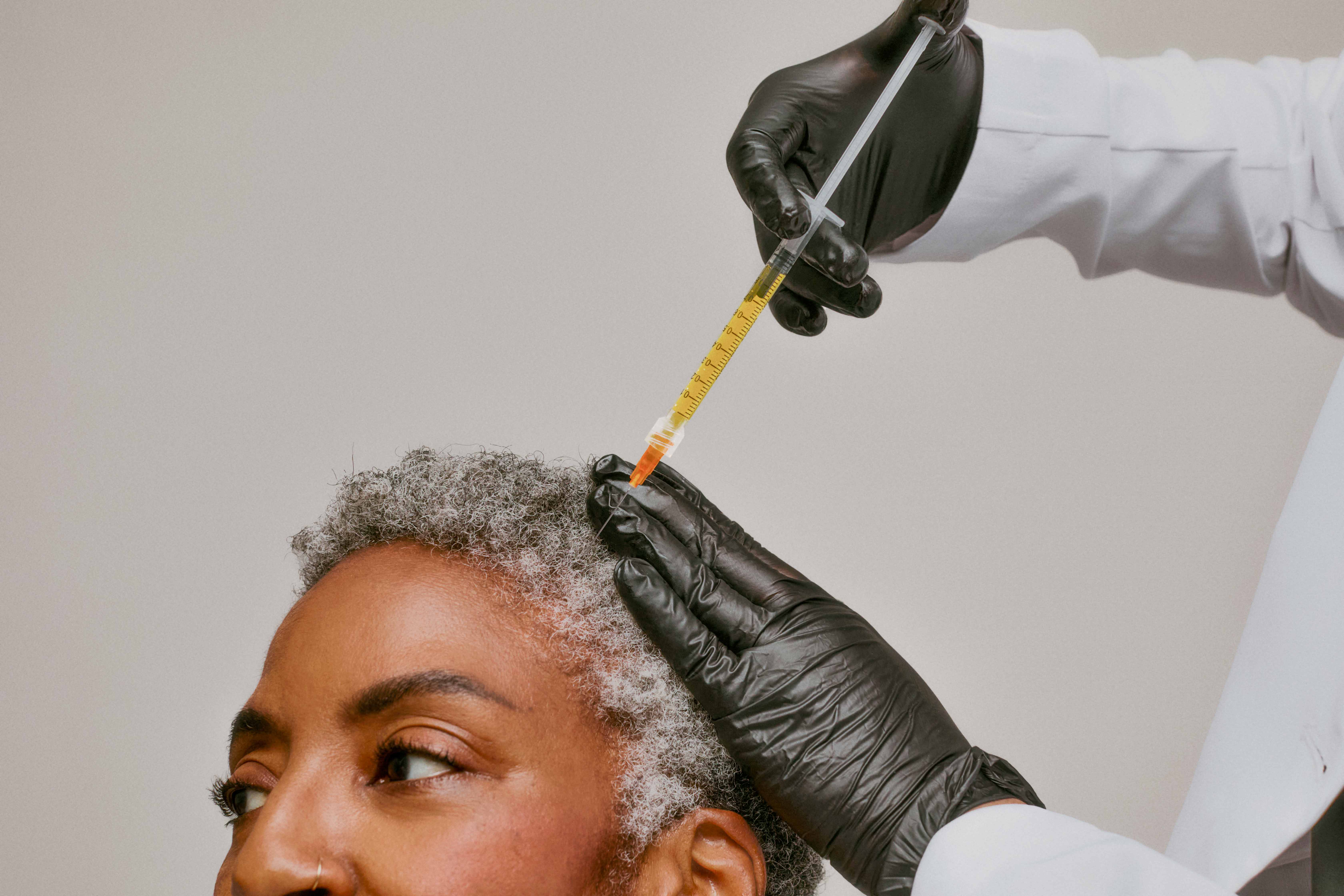
PRP — platelet-rich plasma — uses growth factors drawn from your own blood, concentrated and injected into the scalp. It has decades of clinical research behind it, is performed safely every day in medical practices worldwide, and requires no external or lab-manufactured biological product.
Here's the part most clinics marketing exosomes won't tell you: PRP already contains exosomes. When platelets activate, they naturally release exosomes as part of their healing response. You're not choosing between exosomes and no exosomes. You're choosing between your own, naturally occurring exosomes — in a treatment with 20+ years of evidence — and an unapproved lab-manufactured product.
How each treatment works
The biology behind both approaches.
PRP — Platelet-Rich Plasma | Exosome therapy |
|---|---|
Your body's own growth factors, concentrated | Lab-manufactured cellular messengers from donor stem cells |
A small amount of your blood is drawn and spun in a centrifuge to isolate the platelet-rich plasma — a layer naturally dense with growth factors including PDGF, VEGF, and TGF-β. When activated and injected into the scalp, platelets release these growth factors directly at the follicle. Crucially, activated platelets also release exosomes — nanoscale vesicles that act as cellular messengers, carrying additional growth signals to surrounding tissue. | Exosomes are tiny vesicles — naturally produced by all cells — that carry proteins, growth factors, and genetic material between cells. For commercial hair loss treatment, exosomes are typically isolated from donor mesenchymal stem cells in a laboratory, purified, and then injected into the scalp. The theory is that these exosomes deliver concentrated regenerative signals to hair follicles — signals similar to, but potentially more concentrated than, those in PRP. |
In plain terms | In plain terms |
We take a small vial of your blood, spin it to concentrate the healing components, and inject that back into your scalp. Your body already knows how to use it — because it made it. The concentrated growth factors wake up dormant follicles and improve the environment they grow in. No external products. No lab-manufactured biologics. Just your own biology, amplified. | Exosome therapy injects a formula — prepared in a lab from donor stem cells — into your scalp. The formula contains messenger molecules designed to signal hair growth. The concept is scientifically plausible, and early research is promising. But because no exosome product has been FDA-approved, there is no regulatory guarantee of what's in the vial, how it was made, or whether it's safe for you specifically. |
The detail most clinics skip: PRP naturally contains exosomes. When platelets activate, they release growth factors and exosomes as part of the same biological process. Getting PRP means your follicles are already receiving exosome signaling — from your own body, not a lab. |
|---|
Side-by-side comparison
At a glance.
PRP | Exosomes | |
|---|---|---|
Source | Your own blood — 100% autologous | Lab-manufactured from donor stem cells |
FDA status | FDA-cleared autologous blood products are established in clinical practice | No FDA approved exosome products exist — for any condition |
Adverse events on record | Rare; well-characterized in literature | Serious adverse events reported; FDA safety notice issued in 2019 |
Independent clinical evidence for hair loss | Extensive — 20+ years of published research | Early-stage; limited independent peer-reviewed studies for hair loss specifically |
Contains exosomes? | Yes naturally occurring, from your own platelets | Yes Lab-manufactured from donor cells |
Risk of allergic or immune reaction | Very low — it's your own biology | Higher — foreign biological material from a donor source |
Standardization & quality control | Consistent — established preparation protocols | Variable — no FDA-mandated manufacturing standards for unapproved products |
Needles required | Yes injected into scalp | Yes injected into scalp |
Downtime | Minimal — most patients return to normal activity same day | Minimal |
Cost (typical) | $495/session at Great Many; $1,485 for a 3-session package | $1,500–$5,000+ per session at most clinics |
The question worth asking any clinic offering exosomes
The FDA told patients exactly what to ask.
In its 2019 Public Safety Notification, the FDA recommended that any patient considering exosome treatment ask their provider whether the FDA has reviewed the treatment. Specifically, the FDA advised patients to request the FDA-issued Investigational New Drug Application (IND) number — a designation that would indicate the treatment is being studied under proper regulatory oversight.
If a clinic cannot provide an IND number, the treatment is not being administered under FDA oversight. That is the current status of virtually every exosome hair loss treatment being marketed today.
What the FDA said directly: "The clinics currently offering these products outside FDA's review process are taking advantage of patients and flouting federal statutes and FDA regulations. This ultimately puts at risk the very patients that these clinics claim to help, by either delaying treatment with legitimate and scientifically sound treatment options, or worse, posing harm to patients." — FDA Public Safety Notification on Exosome Products, December 6, 2019 |
|---|
The evidence gap
What the clinical literature actually shows.
PRP has been studied extensively in dermatology, orthopedics, and hair restoration for decades. The evidence for hair loss is robust: multiple randomized controlled trials and systematic reviews have demonstrated meaningful improvements in hair density, thickness, and growth rate. Exosome research is genuinely promising in some areas of medicine — but the specific body of evidence for hair loss is thin, and nearly all of it is preclinical or early-phase.
PRP — clinical evidence | Exosomes — clinical evidence for hair loss |
|---|---|
20+ years of published research | Promising in theory; thin in practice |
Multiple systematic reviews confirm PRP's efficacy for androgenetic alopecia in men and women. Consistent findings: increased hair density, improved shaft thickness, reduced shedding. Safety profile is excellent given autologous sourcing. Well-established in dermatology and hair restoration guidelines. | Pre-clinical and animal studies show exosomes can influence hair follicle cycling. Early human studies are small, uncontrolled, and largely industry-funded. No large-scale RCTs for hair loss have been published as of 2026. The FDA has not reviewed or approved any exosome product for hair loss — or any other indication. |
Why Great Many offers PRP — not exosomes
Our reasoning, plainly stated.
We won't offer treatments we can't stand behind at the regulatory level. When we introduce a treatment at Great Many, we need to be able to look a patient in the eye and tell them the FDA has reviewed it. We can do that with PRP. We cannot do that with any exosome product currently on the market.
Your own biology is safer than someone else's. PRP is drawn from your own blood. There is no foreign material, no donor source, no unknown manufacturing process. The immune and safety risks are categorically lower. For a treatment you're having injected into your scalp, that matters.
PRP already delivers what exosomes promise. Activated platelets naturally release exosomes as part of their healing response. The growth signals exosome therapy markets as its unique advantage are already present in PRP — alongside a broader array of growth factors, in a product drawn from your own body, with 20+ years of safety data.
We're skeptical of anything that exploits urgency around hair loss. Our patients have often already spent money on treatments that didn't work. The hair loss space has a long history of overpromising. When a clinic charges $3,000+ per session for a product the FDA hasn't approved and that has limited published evidence — that's a pattern worth naming.
We'll revisit this when the science catches up. We're not dismissing exosome research forever. If and when an exosome product achieves FDA approval with robust clinical data behind it, we'll evaluate it seriously. That's exactly the standard we apply to every treatment we offer. We're a hair growth studio — we follow the evidence.
One more thing worth knowing
PRP contains exosomes. That's not a marketing claim — it's biology. When platelets activate — which happens the moment we prepare your PRP for injection — they release a cascade of growth factors and exosomes as part of the same biological process. Published research has confirmed and characterized platelet-derived exosomes directly from PRP samples. (Torreggiani et al.; MDPI International Journal of Molecular Sciences, 2022) So if you're drawn to the idea of exosomes stimulating your hair follicles, PRP gives you that — from your own body, in a procedure with 20 years of clinical evidence behind it, administered by a board-certified clinician, reviewed by the FDA. That's a better deal than an unapproved product at three times the price. |
|---|
What we offer instead
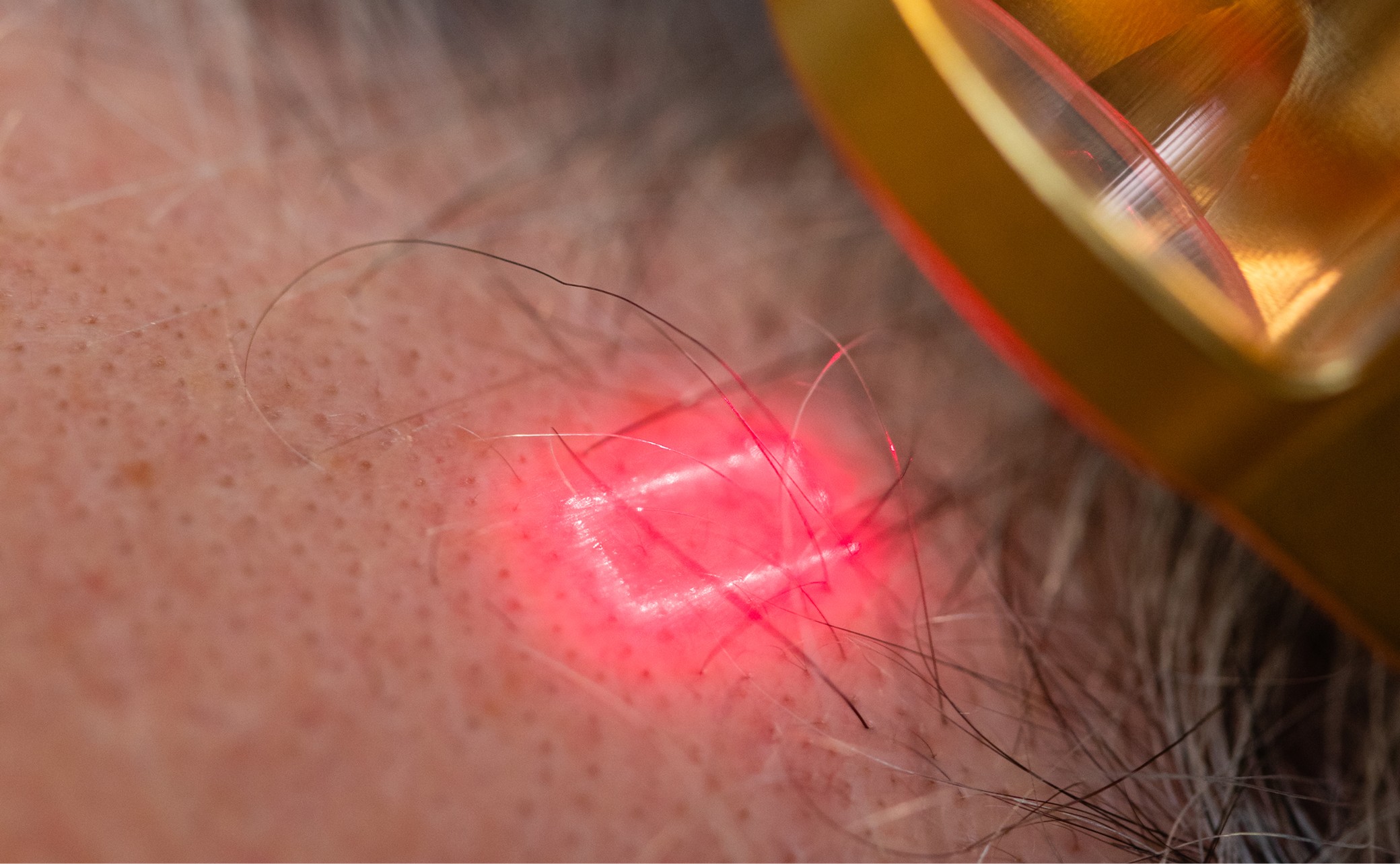
At Great Many, PRP is the foundation of everything we do. We pair it with FoLix — the first FDA-cleared fractional laser for hair loss — for patients who want a multimodal approach that activates your biology from two directions simultaneously.
References & sources:
FDA. (2019, December 6). Public Safety Notification on Exosome Products. U.S. Food and Drug Administration.
Torreggiani E, et al. (2014). Exosomes derived from platelet-rich plasma: potential tool for tissue engineering. Regenerative Medicine. First report of exosomes isolated from PRP and their role in tissue regeneration.
Morales-Kastresana A, et al. (2022). Isolation of platelet-derived exosomes from human platelet-rich plasma. International Journal of Molecular Sciences. PMC8911307.
This page is for informational purposes. Consult a qualified clinician before beginning any hair restoration treatment. Great Many does not offer exosome therapy. PRP is administered by board-certified clinicians under appropriate medical supervision.
Share