Summary
FoLix and red-light helmets both use light, but the comparison stops there. FoLix delivers fractional laser energy deep enough to trigger a genuine regenerative response in the follicle — activating the body's own growth signals from within. Red-light helmets emit low-level light that doesn't produce the same biological depth or effect. Calling them comparable is like calling a scalpel and a flashlight the same tool because both are made of metal.
Summary: The FoLix laser and red-light helmets both have a red light—but the color of the light is where the comparison ends. FoLix stimulates follicles through a healing response, while red-light therapy simply supports follicle metabolism. Learn more about FoLix here.
If your interest has been piqued by our FoLix™ Laser Hair Restoration treatment, you're probably wondering – how is this different than a red light cap?
Because they both involve light, particularly red light, it's often the first question we get and they're often compared.
But the color of the light is about where the comparison ends.
Comparing a red light cap and FoLix is a bit like comparing a bicycle and a car. Both have wheels. Both are modes of transportation. But beyond that shared feature, they are fundamentally different machines.
The biological signals they create in the scalp—and the role they play in hair restoration—are entirely different. Understanding that difference can help clarify why one is an in-studio medical treatment and the other is a supportive at-home modality.
FoLix: An In-Studio, Fractional Laser Designed to Stimulate Follicles
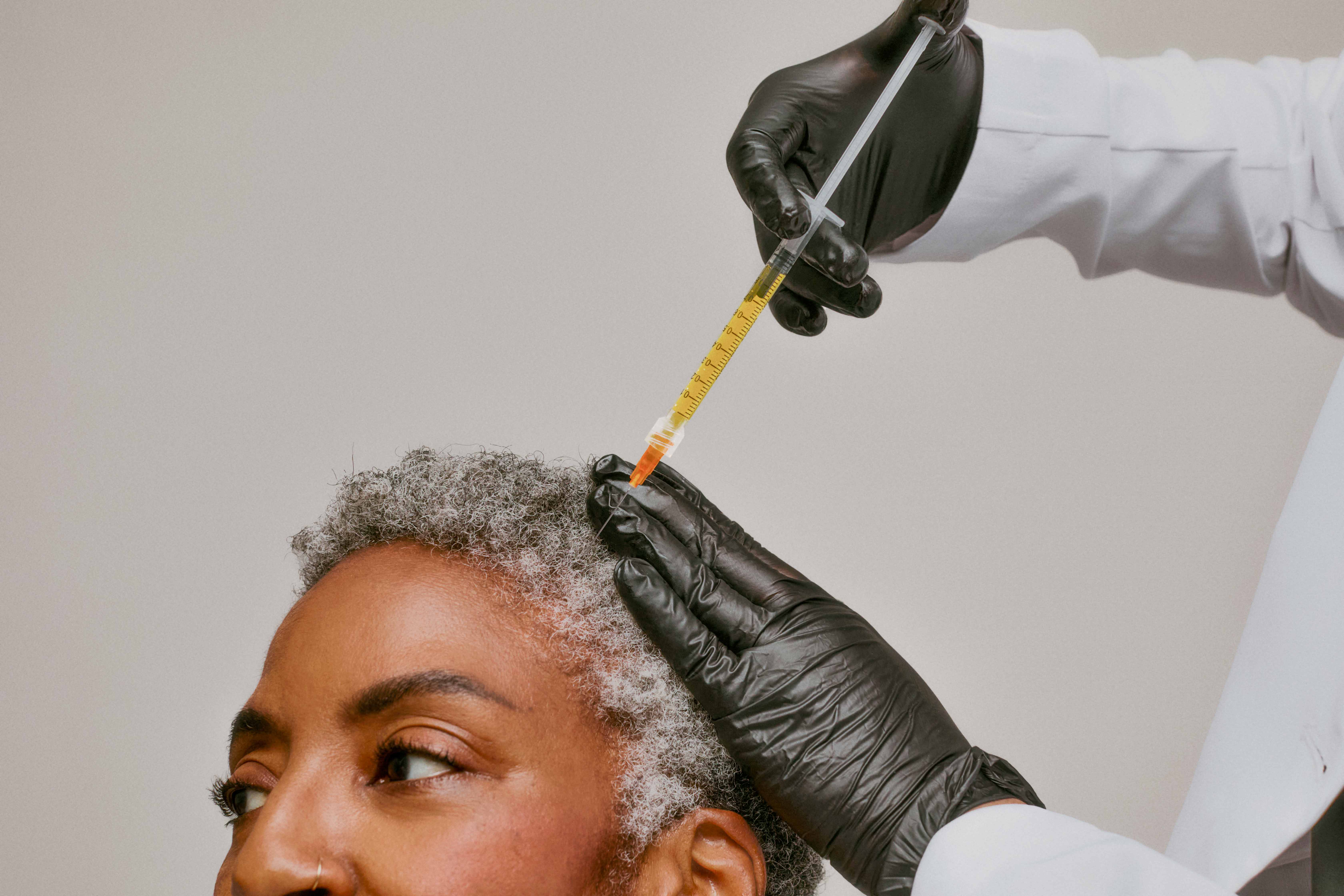
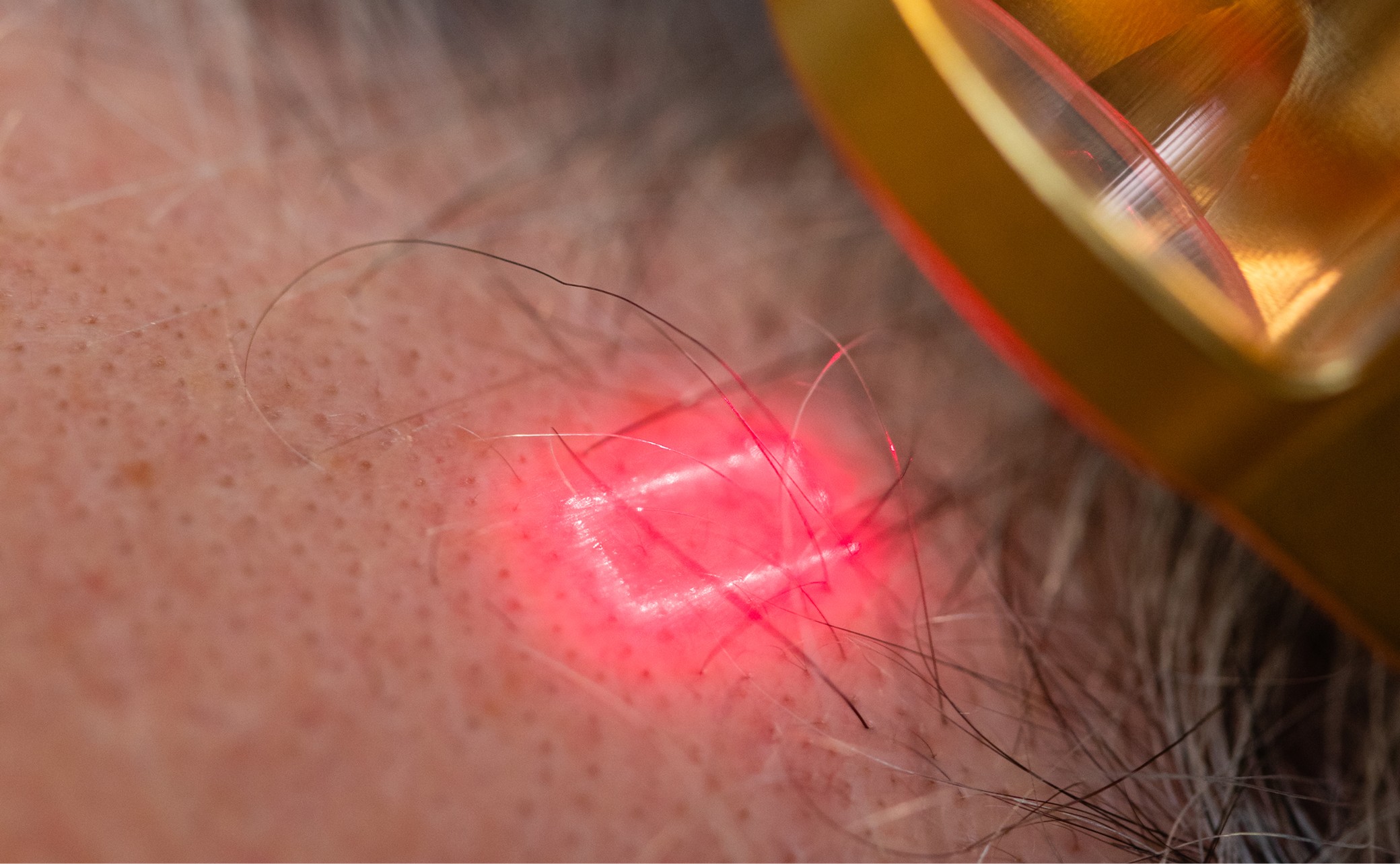
FoLix is a medical fractional laser treatment performed in studio. The technology works by delivering controlled laser energy into the scalp, creating microscopic thermal channels in the scalp.
What does that mean in layperson's terms?
In a super precise way, the laser creates targeted heat around your hair follicles. That heat is carefully calibrated – just the right amount of heat creates a micro-injury that prompts the body to send blood flow and healing nutrients to your follicles, thus activating growth.
The laser essentially gets your follicles to exclaim, "Hey! Something just happened, we need support over here. Send resources!"
Those resources create a cascade of good things for your follicles, like increased circulation, cellular activity, and regenerative signaling around the follicle.
In skincare, fractional lasers are commonly used for skin resurfacing because they stimulate the body’s repair mechanisms. In hair restoration, with FoLix™, the first and only FDA-cleared hair growth for laser, the same principle is applied to the scalp to help encourage follicles to re-enter the growth phase and function more robustly.
Because of the strength of this treatment, sessions are typically performed periodically in studio, rather than daily at home.
Red-Light Helmets (LLLT): An At-Home Support For Follicle Metabolism
Red-light helmets operate on a very different principle called low-level light therapy, or LLLT.
Rather than triggering a healing response, red light devices deliver low-energy red or near-infrared light to the scalp. This light is absorbed by mitochondria—the 'power plants' inside our cells—which can increase cellular energy production and support metabolic activity in follicle cells.
The effect is more subtle and supportive. LLLT doesn’t create a regenerative, wounding-and-healing response in the scalp. Instead, it helps improve the cellular environment around existing follicles, which may support their ongoing function.
Two practical factors also influence whether red-light therapy devices can work effectively.
First is the quality and quantity of the light itself. Not all devices are created equal — truly therapeutic LLLT requires a sufficient number of diodes operating at specific wavelengths. If it’s wildly cheap on Amazon, it may be closer to putting a string of Christmas lights on your head than delivering real results.
Second is whether that light actually reaches the scalp. Hair can block, absorb, and scatter light before it ever reaches the skin, which means device design and positioning matter. Many LLLT devices include comb-like teeth or other features specifically intended to part the hair so the light can reach the scalp where the follicles live.
Because the signal is gentle, these devices are designed for frequent use — often several times per week at home.
Why These Treatments Are Often Confused
The confusion mostly comes from the shared idea of 'red light' and the fact that some red light caps even use the word "laser" in their marketing.
But in reality, the type of light, the energy delivered, the mechanism of action, and the way the scalp responds are very different.
Returning to our earlier analogy, this is similar to assuming a bicycle and a car perform the same role simply because both have wheels. The shared feature is superficial; the underlying mechanics are entirely different.
Another way to think about it… Remember those laser pointers for pointing at a presentation? You could point one of those laser pointers at your skin all day long and it's not going to resurface it. A dermatologic laser might look like a laser pointer if you pointed it against a wall, but it operates entirely differently to actually resurface your skin. (Both would get your cat going nuts.) That’s why comparing the two technologies isn't meaningful.
How They Fit Into a Hair Growth Plan
Successful hair restoration rarely relies on a single treatment. Follicles are influenced by many factors—hormones, genetics, circulation, cellular energy, and more—so most effective plans combine multiple approaches that address different aspects of follicle health.
Within that broader strategy:
FoLix is often used as a targeted stimulation treatment, helping to activate or strengthen follicles through the natural wounding and healing response in our bodies.
Red light (LLLT) devices are generally used as supportive therapies, helping maintain a healthy cellular environment around the follicle.
FoLix is like your hardcore training session with an expert trainer; your red light cap is like your at-home routine between sessions.
Because they act on the follicle in different ways, the treatments can sometimes complement each other. But they are not interchangeable—and comparing them directly can be misleading.
The Bottom Line
While FoLix and red-light helmets both involve light, they operate through entirely different biological mechanisms.
FoLix uses a medical fractional laser to trigger a healing response that stimulates follicle activity.
Red-light helmets use low-level light therapy to support follicle metabolism and cellular energy.
Understanding that distinction helps explain why these technologies are best viewed not as competitors or an either/or situation, but as different tools designed for different roles in supporting hair growth.
For more information our the FoLix™ laser, visit our page here
Share